


Newsletter for January, 2016
From Our Minister:
 Thank You for This Gift:
Thank you for the gift of this sabbatical season in our shared ministry.
Thank you for this gift of rest
from the intensity of spiritual leadership in our vibrant congregation.
Thank you for this gift of renewal
that has led me more deeply into practices of reading and writing that
nourish me.
Thank you for this gift of presence, the ability to be more present
with my family, especially with my husband
and our six-year-old, three-year-old, and six-month old children in this
season of growth in our lives. T
hank you for this gift of neighborliness,
when I have had more space and time to lift my eyes
from my own narrow path,
and reach out to others.
Thank you, thank you.
I have missed you and your faces filling the pews, and your voices lifted
up in song.
I have missed you especially in these days and weeks
when the news is bad,
the days are short,
and the nights are long.
I am so grateful to you and Rev. Tera and our leaders
for your determination
to shine a light on injustice in our city,
to shine a light
on vulnerability, trust, courage, and vision
in building our shared future,
to shine a light
on music and teaching and arts and worship
on the gifts we share:
joy, peace, hope in the struggle.
It is good to be among you again
With you on the threshold of a new year
as we walk together
on the path of growth and courage.
With a full heart,
Rev. Rebecca
P.S.: I’m looking forward to reconnecting with you. Please catch up with me at minister@uusm.org or at church at (310) 829-5436 x104. Starting this month, I’ll be experimenting with a new work schedule by being in the office Monday through Wednesday, and reserving Thursday to focus on worship. Friday will be my day off. You can also make an appointment to see me by emailing Nurit at admin@uusm.org
From Our President:
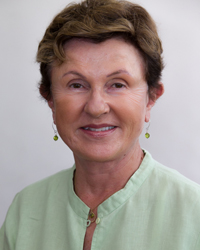 Leadership Development Should Not Wait
Before I launch into this month’s “topic,” I would like to highlight one of our devoted volunteers. Beverly Alison is the Champion of our art wall that not only brings beauty to Forbes Hall with monthly exhibits, but 20% of the sale of the art, which is donated to the church. Beverly’s contribution is a labor of love and she does it so well. We are grateful!
I have always been interested in leadership and governance. I believe that an organization needs good governance in order for leadership to develop and thrive. When Ken Brown presented his Governance Workshop on July 11, 2015, for our congregation, he mentioned that one important (but often neglected) Board function is leadership development. Board member Beth Brownlie brought that to light at the December 2015 Board meeting when she recommended (under New Business!) that the Board work on developing a clear path to leadership in the church.
At the January 13, 2015, Board meeting, the Board ratified a Policy Governance Statement of Wishes. These are aspirations we have for our church whether or not a policy-style governance is ultimately adopted. Three of the 12 wishes address leadership, namely:
• Inspired, energized leadership focused on UU Santa Monica mission
• Increased participation and leadership from volunteers who have freedom to move forward with good ideas, and are freed up to do the good work they want to do.
• Increased ability of leaders to focus on the future and the possibilities and potential rewards of change.
We have appointed a Governance Task Force (GTF). This is the group of people who carry the process forward by fashioning a proposal for change step by step. We welcome Barbara Kernochan, John Zinner, and Rhonda Peacock, along with Rev. Rebecca, as our Governance Task Force, but we heed Dan Hotchkiss’s words of caution. In his book “Governance and Ministry” he cautioned that a congregation can have only two or three big things on its agenda at a time. With our Congregational Assessment and our vote on finances on the immediate horizon, governance will need to wait its turn.
But leadership development should not wait. In the past, we have had a Membership and Leadership Committee that came out of Long Range Planning. (I even have an old PowerPoint about that!) We don’t have such a committee anymore because the leaders moved on. I think leadership development needs to be part of our infrastructure and supported by our governance.
Governance needs to fit the organization and for us the organization is our church; we long for a governance structure that can more clearly support the ministries and programs of UU Santa Monica. Let’s look at our governance and try to find a structure that fits the size of our congregation today and can help us grow into the future. That may or may not be Policy Governance. There are many governance structures that can help a church make sense of its programs and ministries and determine who is responsible for what.
But what drives all structures is that the governing body is responsible for the following:
• Creating a vision,
• Securing resources,
• Defining clear roles and responsibilities,
• Establishing benchmarks for performance and monitoring them, and
• Being accountable to key stakeholders.
Let’s try to find a way for our governance and our leadership to inspire each other. There are many resources available to guide us with leadership development. We invite expertise from our congregation to help us.
— Patricia Wright
Featured Articles:
COMMITTEE ON MINISTRY:
Congregational Assessment
One purpose of the Committee on Ministry is to consider the health of our church community. In recent months we have become aware of conflict and unhappiness among members of our church. In an effort to better understand these concerns, the Committee on Ministry is working with UUA Regional Congregational Life Staff to convene focus groups designed to help us evaluate these concerns. These one-hour focus groups are scheduled for Saturday, February 20 to Monday, February 22. The focus groups will be led by Ken Brown, our UUA Congregational Life Staff member, and multiple UUA Regional Consultants.
The focus groups are part of UUA-endorsed steps toward bringing our community to more open communication, compassion, and healing. Everyone is encouraged to participate in order to ensure a fair, representative, and compassionate process.
From a historical perspective, a year ago the Committee on Ministry conducted a survey — something we thought of as a continuing conversation with our congregation. Though the response was small, we learned from a few courageous people there was and continues to be unhappiness among us. And we were reminded that all of us, regardless of the level of unhappiness or the issue at hand, love this church of ours. In the months since, we have heard from more of our members and friends, and conflict, unhappiness, hurt feelings and sorrow continue to be important issues.
The initial UUA-led assessment will consist of focus groups of 8 to 10 people, led in conversation by Regional Staff. These focus groups will not be led by members of our congregation. Focus group questions will be open-ended, designed to provide members the opportunity to communicate their concerns. Ground rules will provide guidance for fair, respectful communications. There will be many focus groups, scheduled over many different days and times, to accommodate all who wish to participate. After the focus groups have been convened and completed, UUA Regional Staff will prepare a written report reflecting what we told them during the focus groups, and they will provide recommendations for our next steps. The report will be made available first to the Committee on Ministry and the Board and will then be shared with the congregation.
Please stop by the Committee on Ministry table in Forbes Hall after services throughout January for additional information. We will be there every Sunday, and there will be many other opportunities to learn about this important, nurturing endeavor.
Let us come together to start the healing process and honor one another in this beloved community of ours. Respectfully submitted,
— Committee on Ministry: Leon Henderson-MacLennan; Barbara Kernochan; Margot Page; Tom Peters, Co-Chair; Sue Stoyanoff, Co-Chair; and the Reverend Rebecca Benefiel Bijur
FROM THE COMMITTEE ON MONEY:
December 6 Meeting Summary and Recommendations
81 ATTEND TOWN HALL MEETING ON MONEY; YOU CAN SEE THE POWERPOINT BEFORE THE FEBRUARY 14 VOTE.
On December 6, the Board, led by our president, Patricia Wright, presented a PowerPoint summary followed by discussion of the proposed motions prepared by the C on $. Ron Crane, David Olsen, Vicki Foxworth, and Steve White from the C on $ were present and responded to questions.
To recap, the background of the formation of the Committee on Money (C on $) evolved as our church received some very large and unique bequests and donations over the past five years or so. There were two types of bequests: 1) the member leaving us the money “directed” or restricted what it could be spent on, and 2) the member leaving or giving the money did not restrict its use, generally called “unrestricted reserves.” At the May 2014 annual meeting, the congregation voted to appoint the C on $ to research, evaluate, and make recommendations as to how we should handle these unique financial donations.
It was noted that approximately half of the $880,000 we originally had in unrestricted reserves has already been spent or is now set aside to pay for projects already approved by the congregation, such as the $80,000 set aside to update the lighting and sound system in the sanctuary. (Note: A separate accounting is being prepared setting forth the expenditures of the prior unrestricted reserves.) Although some of the funds were spent on much delayed repairs and maintenance, it is projected that there will be approximately $430,000 of the “unrestricted reserves” left by June 30, 2016.
In summary, the PowerPoint highlighted that, if the C on $ resolutions pass, there will be an endowment and four separate “reserve funds” created as follows:
TYPE OF ACCOUNT AND INITIAL ALLOCATIONS
1. Catastrophe reserve - $150,000 with a goal of $750,000
2. Capital building reserve - $50,000 with a goal of $250,000
3. Contingency reserve - $30,000 with a goal of $30,000
4. Endowment Fund - $150,000 with a goal of $2,000,000
5. Budget deficit reserve - $50,000 (for 2016-17 fiscal year)
A lively discussion, with comments, questions, and answers followed. There were several questions regarding the large deductible for the earthquake insurance coverage. The explanation is that UU Santa Monica is lucky in that we are “grandmothered in” for earthquake coverage for the main church building. However the deductible for earthquake coverage is 25% of the damage. (The Cottage cannot be covered by earthquake insurance as no insurance carrier will provide coverage for commercial buildings in California.)
There were questions regarding the use of these funds for the past several years to make up a yearly deficit budget. In May 2015 the congregation voted to use another $52,000 for the current fiscal year (which ends on June 30, 2016), and the Finance Committee and the C on $ anticipate in their motions that we will need at least another year to work towards a sustainable budget at our church where our annual income closely matches our budget. Members expressed concern that we are using our unrestricted reserves to supplement our annual budget.
Several questions pertained to the implementation of the endowment, and if, as a congregation, we could “undo” the endowment if we need the funds or change our minds. The C on $ representatives confirmed that our congregation can dissolve or withdraw principal from the endowment by a 2/3 vote of the congregation. The C on $ explained that the amounts in the reserve accounts could be moved or changed by a vote of the congregation or by the Board, depending on the amount of money being rebudgeted.
Patricia Wright took the lead in preparing the PowerPoint and worked in collaboration with the C on $ representatives, Ron Crane (chair), David Olsen, Ken Alexander, Vicki Foxworth, Leslie Reuter, and Steve White (recording secretary for C on $) as well as Kim Miller, Treasurer. Steve White drafted the voter summary for the C on $ resolutions. 81 people attended the town hall meeting.
Copies of the Committee on Money resolutions and voter summary as well as the PowerPoint itself are in the church office. If you would like this information sent to you by email attachment, please request it from Nurit Gordon in the church office. Everyone is encouraged to review these documents now and well in advance of the February 14, 2016, business meeting vote on the Committee on Money’s resolutions. Anyone with further questions may direct those to any member of the C on $, or Kim Miller .
— Kim Miller
Numbers at the UU Church of Santa Monica
One way of measuring the health of our church is to consider quantitative indicators of financial status, membership, and attendance. These kinds of measures cannot replace qualitative indicators: do congregants feel fulfilled, happy, and satisfied with the direction of the church? Nevertheless, numbers can be helpful.
PURPOSE. This report, which is available on request from the church office, presents numbers for membership and financial status from 2008 to 2015 and for attendance over time from 2011 to 2015. These numbers address whether these indicators are declining, stable, or increasing.
SUMMARY: First, attendance shows a slight decline between 2010 and 2014. Membership and pledges are relatively stable between 2010 and 2014. Second, rental income and other giving have increased. Third, expenses have increased rapidly and consequently there are larger deficits. Fourth, there is an increase in income given per member and even greater increase in expenses per member.
IMPLICATIONS: Based on these numerical indicators, the church appears to be stable but is not growing in membership or attendance. Stable pledge income has implications for the kind of spending plan that the church implements. Because pledges are not increasing at the rate of expenses, it would be prudent to decrease expenses. On the other hand, the question of how to cut expenses (which would likely affect staff and salaries) is beyond the scope of this report.
— Vilma Ortiz
 FROM A MEMBER OF OUR FINANCE COMMITTEE:
When Will We Adopt a Sustainable Operating Budget?
A sustainable church budget is important because it doesn’t push problems into the future. When we spend more on operating expenses than our current income, we must withdraw money saved from prior years’ income or inherited previously. That is not prudent because future bequests are unpredictable. Bequests are best used for endowments, contingency reserves, and building (“capital”) improvements.
During the fiscal year ending June 30, 2015, we took about $60,000, or $5,000 per month, from our legacy (bequest) funds to pay our regular operating expenses. We’ve been doing this since 2008-2009, the year of the Great Recession, when we spent $2,445 per month on income shortfalls. We’ve gotten in the habit of doing so — living beyond our means — every year since, except for 2009-2010.
At our congregational meeting in May, we voted to approve and accept a budget that will require us to take up to $52,000 more from our one-time legacy funds by next June to pay recurring expenses.
However, as of November 30, we were on pace for a projected $87,000 deficit by June 30, $35,000 more than the Congregation has authorized. While we work and hope for a major improvement in pledging, fiscal year-to-date pledge receipts through November 30 are more than $10,000 lower than for the previous three years! Prudent management says that spending savings for current expenses only makes sense when there is a specific plan in place to get back in balance as soon as possible after a sudden shock. However, our leaders have advocated that we must maintain the vitality of our church and enable it to grow, regardless of our deficit, by maintaining the current, growing level of expenses. We’ve tried that for five years and it hasn’t worked — all trends are down.
To my knowledge, 18 months after the $72,000 deficit budget was approved in May 2014, specific plans for reducing expenses or increasing revenue have not yet been proposed or developed. The Garden of Eternity has been the only significant new or increased source of revenue, with 14 bricks at $500 each sold to date in addition to Ray Goodman’s initial $10,000 gift. Pledges have not increased over the last six years and membership has decreased yearly for the last 10 years. Annual expenses have steadily gone up.
Everyone knows that balance requires cutting expenses and/ or increasing income. Cutting expenses is hard when most of our budget pays for staff costs and fixed operating costs, but cutting had to be done in 2008 when the Great Recession of 2008 suddenly dropped our income. For me, cutting staff is a desperate measure when there are no other options. If we had not had legacy money in the bank, we would have had to cut staff for the last 18 months, or indeed for the last six years!
However, there are other options which have been used in the past and need to be considered. None are easy, as they are all worthy expenses, but we may prefer them to cutting staff or programs. It makes no sense to me to spend one-time money on recurring, annual expenses on a continuing basis. Let’s face reality, now, not later!
We currently send $25,000 per year in per-member dues to the UUA and the UUA district/regional offices. We have worked hard for years to bring both closer to 100% of our “fair share” per member, and are proud to have done so. Does it make sense to keep spending one-time bequest money to pay annual dues?
We generously and fairly approved $15,000 in staff raises for the current fiscal year, even though we didn’t know the total cost at the time. Does it make sense to spend one-time bequest money to pay for both this year’s raises as well as next year’s raises on top of this year’s?
We have had a wonderful Facilities Development Committee with volunteer professionals leading it for the last several years. This has been terrific, helping us recover from decades of deferred and neglected maintenance.
• We raised $200,000 to replace the leaky roof over the Sanctuary while bringing the north wall of the Sanctuary up to earthquake standards.
• We used $233,000 of Drew Still’s bequest to improve our administrative offices.
• We have used $200,000 of other bequests on building and campus (“capital”) improvements,
• Over the last seven years, we invested more than $630,000 in building improvements.
• This was on top of about $2 million raised by previous capital campaigns.
However, during these same seven years, we used $244,000 of bequest money (average of $35,000 per year) to pay for ordinary operating expenses! Do we really want to approve a third massive deficit of $50,000 or more for 2016-17 this coming May?
If all our operating expenses are considered vital by our congregation, why have we, the congregation, not raised enough money and made sufficient pledges to pay for them at any time over the last several years?
Our leadership must do more toward building financial support for their spending plans, or scale them back.
The choices are hard, but only get harder each passing year. I ask every member of our church community to consider our options to get us back on track to being a financially healthy and sustainable congregation. Let’s take action now, not later.
— Steve White
The Pledge Team will donate:
• $5 for every pledge card turned in by December 20
• $10 for 3% increase in your pledge
• $15 for 5% increase
• $20 for 10% or more increase
(We have collected $1,150 to date for the Food Bank)
Please take time now to make a financial commitment to our beloved community at a level that is deeply significant for you. And many thanks to all who attended house parties!
With gratitude from your Pledge Team:
Beth Brownlie, Barbara Gibbs, Gretchen Goetz, Kit Shaw, Kim Miller, Jackie Weber, Patricia Wright, Advisors: Abby Arnold, Rev. Rebecca Benefiel Bijur, Rev. Tera Little
UU SANTA MONICA MEMBERS AND FRIENDS WITH PLEDGES FOR 2016 RECEIVED IN DECEMBER:
Abby Arnold, Kirk Attebury, Francois Bar and Alison Kendall, Bettye Barclay, Rebecca and Jonathan Bijur, Harvey and Sheila Bjornlie, Bonnie Brae, Leslie Beauvais and Edward Brand, Christopher Brown, Helen Brown, Patrick Burrows and Nancy Shinno, Leonard Cachola, Teresa Castelli, Kathy Cook, Cynthia Cottam and Tom Early, Rebecca Crawford, Dorothy and Philip Curtis, Steven DePaul and Beth Rendeiro, Janine Venable deZarn, Bob Dietz and Ellen Levy, James Duckman and Emily Linnemeier, Sarah Edgington, Sanna Egan, Joe Engleman, Michael Eselun, Melinda Ewen, Jan and Bruce Ferguson, Dwight Flowers, Resa Foreman, Clayton Fossett, Vicky Foxworth and Jeff Pressman, Roberta Frye, Norbert Gallery and Rima Snyder, Steve Garboski, Barbara Gibbs, Wendi Gladstone, David and Gretchen Goetz, Marion Goldenfeld, Patricia Gomez, Melissa Goodnight, Janet Goodwin and Karl Lisovsky, Rayma Greenberg, Alice Hall, Nora Hamilton, Charles and Christine Haskell, Denise Helton, the Henderson-MacLennans, Emily Hero, Lawrence Howard, Glen and Nancy Howell, Mark Huberman, Gerry Hurst, Jay Johnson and Rachel Sene, Cynthia Kelly, Barbara Kernochan, Margaret and Yacoub Kharraz, Geralyn Lambson, Ann and Carl Lekven, Anne MacQueen, Katie Malich, Joyce and Warren Mathews, Patricia and Richard Mathias, Laura Matthews, Patrick Meighan and Amy Thiel, Ralph Meyer, Kim Miller, Liam Mina, Francine and Stuart Moore, Jerry and Sue Moore, Helene and James Morison, Susana Nierlich, Beth Brownlie and Bryan Oakes, David and Kitsy Olson, Vilma Ortiz, Tony Patel, Dan and Karen Hsu Patterson, Lorenzo Pelayo, the Rev. Ernest Pipes, Ruth and Allen Potts, Barbara Powers, Joan Reitzel, Leslie Reuter, Carol Ring, Elaine Roark, Scott Roewe, Anne Saldo, Kit Shaw, Catherine Gentile, Temitope Sonuyi, Diana Spears, Marguerite Spears, Andrea Steffan, Dorothy Steinicke, Isabel and Bayard Storey, Susan Stoyanoff and Stephen White, John Sussman, Jila Tayefehnowrooz, Pamela Teplitz and Rick Teplitz, Linda van Ligten and Greg Wood, Jennifer Westbay, Jessamine Winston, Edward and Patricia Wright, Michael Young, Joan Zierler, and John Zinner.
December Festivities
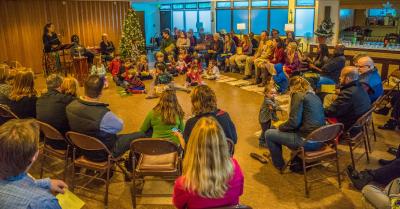
Friendly Beasts Christmas Pageant, led by Kris Langabeer

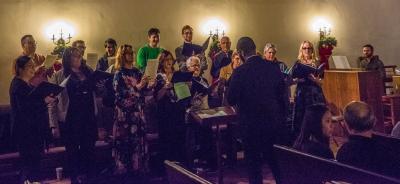
Christmas Eve Services
News & Announcements:
The Quest for Truth: invitation and questions for further exploration
What is something that you once thought was true, but you don’t think is true anymore? Was there a time when you heard someone say something that isn’t true? What did you do, or what do you wish you had done? What is one thing you know is true? If you would like to share your reflections on these questions or other aspects of truth in your spiritual journey, please email Rev. Rebecca at minister@ uusm.org. If you would like your reflection to be included in worship service in our series on truth, please email her by January 18.
 Quotes About Truth
Bettye Barclay has provided this list of quotes about our ministerial theme for January. Daily quotes also appear in the weekly electronic announcements.
Week 1. Three things cannot be long hidden: the sun, the moon, and the truth. — Buddha
Week 2. Believe those who are seeking the truth. Doubt those who find it. — Andre Gide
Week 3. If you tell the truth, you don’t have to remember anything. — Mark Twain
Week 4. A thing is not necessarily true because a man dies for it. — Oscar Wilde
Week 5. The most common form of despair is not being who you are. — Soren Kierkegaard
Dining For Dollars Is Coming In February!
Dining for Dollars is an annual silent auction that raises income essential to meeting our UU Santa Monica budget goals. Members and friends can bid on events and services such as dinners, tours, baked goods, gift certificates, and concerts offered by other members and friends. Whether you’re new to the church, or a regular, Dining for Dollars is a fun way to get to know the people at UU Santa Monica. The bid sign-up sheets will be in Forbes Hall after both services on February 21 and 28 this year. Everyone is encouraged to participate, both as a donor of dinners or services and as a bidder. But NOW is the time to sign up to offer an event or service. Thank you for your contributions to the church! Contact Farrokh Allen, Barbara Gibbs or Sue Moore for more information.
Town Hall Meeting - January 17, 2015 12:30 pm in the Sanctuary after the second service
PURPOSE: To review and discuss the recommendations from the Board of Directors about the Resolutions of the Committee on Money
Congregational Meeting February 14, 2015 12:30 pm in the Sanctuary after the second service
PURPOSE: To vote on the recommendations about our financial future from the Committee on Money and the Board of Directors
Faith in Action News:
Greater Los Angeles UU Justice Group
The Reverend Rick Hoyt-McDaniels, minister, First Unitarian Church Los Angeles, welcomed participants to the first Greater LA UU Justice Group meeting held at Neighborhood UU Church in Pasadena on Saturday, December 12. Members from nine L.A. county churches (including UU Santa Monica) attended to hear about regional issues being addressed at each church. These issues were near and dear to those of us on the Faith In Action Commission. Church congregational membership ranged from 44 members at Sepulveda UU Society to 710 at Neighborhood. UU Santa Monica is the second largest congregation in L.A. county.
Guest speaker Evan Junker, Executive Director, UU Justice Ministry of California, outlined the priority issues for the upcoming year: economics, racial equity, immigration and detention, and the environment. The UUJM-CA has many resources for congregations in these areas. Information can be found at their website: uujmca.org.
Jerron Jordan, community organizer, LA Voice, a part of the PICO National Network, spoke about this interfaith federation’s work in “Race, Faith and Power.” After hearing all the social justice work being done at UU churches, Mr. Jordan said he felt as if he was “home.”
Members of this Justice Group plan to share our resources in order to work on common issues of homelessness and hunger, anti-racism awareness, immigration legislation, worker rights, and environmental justice, to name a few. The group will meet again in February at Neighborhood UU Church. If you are interested in finding out more information or to join the UU Justice Group, please contact FIA members Cathie Gentile, James Witker, Rick Rhoads, or Roberta Frye.
— Cathie Gentile, co-chair Peace & Social Justice
Second Sunday Cinema
Whatever the outcome of the UN climate change conference in Paris — and it doesn’t appear that the agreement will be close to sufficient to limit the rise of temperature to 1.5-2.0 degrees Celsius — people around the world will still have to mobilize in great numbers to put pressure on their governments to drastically limit the amount of carbon released into the air.
In the film “This Changes Everything” (2015, directed by Avi Lewis) based on Naomi Klein’s bestselling book of the same title, Klein presents portraits of seven communities on five continents struggling with the consequences of climate change. She connects the carbon in the air with the economic system that put it there and concludes that we can seize the crisis of climate change to transform our failed economic system into something radically better.
On January 10 the Peace and Social Justice Committee will screen the film in the Sanctuary at 7:30 after Second Sunday Supper. The film is 90 minutes long and we will have a discussion afterward. We hope you will join us!
UU Santa Monica Marches with First Church Against Police Killings
 Members of our Peace & Social Justice Committee (PSJ) went to First Unitarian Church of Los Angeles Sunday afternoon, November 29, to join their congregants in a march through the streets and a rally in MacArthur Park. It was a few days after the one-year anniversary of the non-indictment of Darren Wilson, the Ferguson, MO police officer who killed Michael Brown. As the group of 25 wound its way through Koreatown, one of their call-and-response chants was, “Mike Brown means…Fight back! Omar Abrego means…Fight back! Kyam Livinston means… Fight back! Ezell Ford means…Fight back!” and so on through an unfortunately long list of men and women, mostly African Americans, killed by police officers, stretching geographically from Staten Island, NY (Eric Garner), to Venice, CA (Brendon Glenn, Jason Davis, and Jascent-Jamal Lee Warren). Another chant also echoed through the neighborhood: “No justice, no peace, no racist police.”
The First Church congregants were organized by a new committee there, People’s Liberation Unitarian Universalist Group. PLUUG, which participated in the three marches on Venice Beach that UU Santa Monica’s PSJ spearheaded, invited UU Santa Monica to join them in their mainly Korean and Latino neighborhood. After the rally and march we all dug into a potluck dinner at First Church; dinner conversation included discussion about how to build the movement against racist actions by the police.
First Church minister Rev. Rick Hoyt-McDaniels announced that there would be a meeting December 12 at Neighborhood UU Church in Pasadena to create a social justice group open to representatives from all 12 UU congregations in L.A. county. (See adjoining article, “Greater Los Angeles UU Justice Group.) The collaboration of PLUUG and PSJ that started in September was one impetus toward creating the countywide group.
— Rick Rhoads
Splinters from the Board:
 Congregational Assessment Scheduled for February 20 to 22
President Patricia Wright used her check-in at the meeting of December 8 to deliver gifts to the Board members: a book consisting of “daily meditations for living with love, healing, and compassion.” The book was written by Mary Mackenzie, the woman who led our compassionate communication workshop in October. Patricia also thanked Emily Hero for her work on the Thanksgiving Feast.
Patricia spoke briefly about church governance. There are many different types of church governance, but they are all basically responsible for accomplishing certain things. The Board adopted a governance wish list last year, consisting of goals we wish to achieve by looking at our governance processes. Our governance task force members are Barbara Kernochan, John Zinner, Rhonda Peacock and Rev. Rebecca Bijur. Due to the significant issues before the Board and congregation at this time, governance will have to wait its turn.
A congregational assessment will be conducted by UUA regional staff the third weekend in February.
The consent agenda was adopted after the Garden of Eternity Policy and the Bid Proposal were moved to the discussion agenda.
The December 6 Town Hall meeting to review the recommendations of the Committee on Money was considered a success. The Board agreed to devote its meeting of January 12, 2016 to its own review of the recommendations and to the establishment of an official Board position. The Congregational Business Meeting to vote on the recommendations will take place on February 14, 2016.
The Board discussed, amended and passed the Garden of Eternity Policy.
The Board voted to support the establishment of a Membership Appreciation Task Force, as conceived and recommended by our treasurer, Kim Miller.
Beth Brownlie presented the contract proposal from Network Construction to install the lighting controls in the sanctuary for the amount of $2,720. The contract was approved. Following installation of the controls, the lights themselves must be installed.
Kim Miller presented a motion to authorize the Nominating Committee to establish, subject to affirmation by the Board, an Investment Committee to make recommendations to the Board regarding the investment of UU Santa Monica’s assets. The motion passed.
The Board discussed how it should respond to letters of concern from members of the congregation. We agreed that a response is appropriate and that it should begin with the president and also involve the Board.
Finally, Beth Brownlie recommended that the Board work on developing a clear path to leadership in the church.
— Cynthia Cottam
RE News:
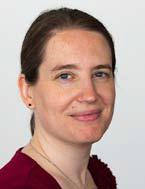 FROM OUR DIRECTOR OF RELIGIOUS EDUCATION:
Why We Do Science At Church
Happy New Year! As I write this, it has not yet arrived — the holidays are staring me in the face, and our Winter Holiday pageant is fast approaching. I love our big, messy pageant every year because it’s one time when our whole church community fully participates in worship together.
Once the new year arrives, though, my thoughts turn toward the new beginnings I’m hoping for. Resolutions and goals and aspirations, oh my! It is a time of searching for a better path, of seeking to be more fully myself. The life of our congregation mirrors the individual path at this time of year, too, as we not only welcome Rev. Rebecca back from her sabbatical but also begin our mid-year assessment of our RE programs to see how they’re going. It’s also a time when many new opportunities for connecting and growing are launched. Be on the lookout for signups for many new adult as well as multigenerational programs coming soon!
This month’s ministry theme is Truth, a theme which reaches to the heart of our Unitarian Universalist tradition. In our 3rd to 5th grade UUniverse Story class, the guiding question of the year is, “How do we know what we know?” The class spent some time earlier this year discussing “why we do science at church,” and this attention not only to seeking answers to our questions but also learning how to determine for ourselves what is true and trustworthy is a big part of what makes the curriculum fit so very well into the landscape of our religious exploration program. The “free and responsible search for truth and meaning” holds its place right in the center of our seven Unitarian Universalist Principles. We are not only free to look for truth, wherever it is to be found for each of us, but are also called to temper our search with responsibility: to be thoughtful and use our powers of reason and discernment as we are choosing truths to embrace.
I suspect that the search for truth has been a part of human life as long as there have been people. As Unitarian Universalists, though, we are a people who know that truth is to be found in many places, and we honor the search for knowledge as one of our core principles. This month, let’s celebrate the search for truth together. Think about the things you know now that you didn’t know this time last year, or 10 years ago, or thirty years ago. Reflect on the best piece of advice you were ever given. Remember the elders who were part of your own life when you were a child, and think about what you learned from them. Then share some of your own truths with those you see at church on Sunday. Friends, as we move into 2016, what are the deep truths from the last year that you want to hold onto, or rediscover anew in yourself? And how can our covenantal community help support you in living out those truths?
— Catherine Farmer Loya
FROM THE ADULT RE SUBCOMMITTEE
Winter 2015-2016 Groups
GROUPS STARTING IN JANUARY
Waking Up to “Who and What We Are”
January 11 to February 29, Mondays, 7 to 8:30 pm, in Room 3
Our “who” is our mind-body expressiveness, caused by parental and cultural influences. Our “what” is our Essence and has the names Consciousness, Awareness, and “what sees out our eyes.” It’s always available and vibrantly marvelous. Our “what” can be termed, “Be-Here-Now.” Each class begins with a review of the previous week’s meditation homework, continues with the same or new meditation, and then a discussion of what happened during this meditation. Classes are learner-centered and experiential.
Facilitator: Bill Blake
Multigenerational Neighboring Faiths Visit
January 9, Saturday, 8:30 am to 2 pm
We will be visiting the Shri Swaminarayan Mandir Hindu Temple on Saturday, January 9. Those interested can meet up at the church for carpooling at 8:30 am. Expected return time is at 2 pm. See the Adult RE Table for important information, including dress code, and helpful handouts prior to the visit.
 UU Foundational Texts Series:
WRESTLING WITH JEFFERSON’S JESUS: A DISCUSSION OF THE JEFFERSON BIBLE
January 31, 2016, Sunday, 1 pm (location to be determined)
Thomas Jefferson distilled a philosophy from the Bible, which was published posthumously. He called this philosophy, “the most benevolent code of morals which has ever been offered to man.” His work, “The Life and Morals of Jesus of Nazareth” will be discussed among the group’s participants, as well as Jefferson’s methodology and the resultant theology. Facilitator: James Witker, jwitker@mac.com
GROUPS STARTING IN FEBRUARY
Building Your Own Theology
February 3 to March 9, Wednesdays, 7 to 9 pm, in Forbes Hall
Inspired by the fourth principle, a free and responsible search for truth and meaning, this class allows you to explore what UUs believe and help you “build a theology” of your own. We will explore our spiritual odysseys, examine the varieties of liberal religious experience, discuss the nature of ultimate reality, and learn how to make meaning in our lives. At the end of the class participants will have the opportunity to write a personal credo of their own theology. Facilitated by Catherine Farmer Loya and Dan Patterson.
 Thursday Night Meditations
MEDITATION THURSDAYS: CENTERING MEDITATION AND MINDFULNESS MEDITATION
February 4 to April 28, 7 to 8:30 pm, in Cottage SE
Each week we will do Centering Meditation and a guided Mindfulness meditation. There will be a brief time of comments, sharing, and questions. Experience the benefits of meditation and see which meditation invites you to develop your own regular practice at home. Sign up at the Adult RE table. Questions? Contact Bettye Barclay. Facilitator: Bettye Barclay
UU Foundational Texts Series:
EMERSON’S ADDRESS TO THE HARVARD DIVINITY SCHOOL
February Date and Time pending.
Ralph Waldo Emerson’s Divinity School Address, delivered to the graduating class of Harvard Divinity School in 1838, was so shocking for its time that Emerson was not invited back to Harvard for another 30 years. What was so controversial? The “sage of Concord” implored the students to cast aside nearly all they had been taught about Christianity. He inveighed against “stationary” theology and urged them to live, learn and speak from their own life experiences — to show that “God speaketh, not spake.” Like other radical concepts in their own time, Emerson’s ideas would have a profound influence on the future of Unitarianism. Facilitator: James Witker
EMERSON’S ADDRESS TO THE HARVARD DIVINITY SCHOOL
February Date and Time pending.
Ralph Waldo Emerson’s Divinity School Address, delivered to the graduating class of Harvard Divinity School in 1838, was so shocking for its time that Emerson was not invited back to Harvard for another 30 years. What was so controversial? The “sage of Concord” implored the students to cast aside nearly all they had been taught about Christianity. He inveighed against “stationary” theology and urged them to live, learn and speak from their own life experiences — to show that “God speaketh, not spake.” Like other radical concepts in their own time, Emerson’s ideas would have a profound influence on the future of Unitarianism. Facilitator: James Witker